Home | MyGov

Accessibility
ऐक्सेसिबिलिटी टूल
कलर एडजस्टमेंट
टेक्स्ट साइज़
नेविगेशन एडजस्टमेंट

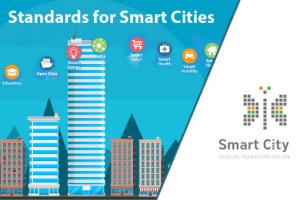
Draft Standards for Smart Cities in India

Draft Standards for Smart Cities in India
आरंभ करने की तिथि :
Dec 02, 2016
अंतिम तिथि :
Dec 21, 2016
00:00 AM IST (GMT +5.30 Hrs)
प्रस्तुतियाँ समाप्त हो चुके

Smart Cities Mission is one of its kinds and does not follow a ‘one-size-fits-all’ approach. Only a broad framework has been given to cities in which they have to ...

Smart Cities Mission is one of its kinds and does not follow a ‘one-size-fits-all’ approach. Only a broad framework has been given to cities in which they have to conceptualize their idea of a Smart City and plan their pathway to ‘smartness’.

Ministry of Urban Development has so far selected 60 Smart Cities in various rounds and based on the Smart City Proposals submitted by Cities, this Ministry has started the process to set the standards for the Smart Cities in India. 16 key features have been outlined, which form the guiding framework for the development of Smart Cities in India. Cities have used this framework to determine their pathway towards ‘smartness’ in their SPVs. The framework includes criteria for Smart City features, induction and the benchmarks. Importantly, there are four stages defined in the pathway of Cities towards smartness. Starting with the baseline condition the Smart Cities will progress through the following stages -

• Level 1 – Base case where service levels are less than 50% of the prescribed benchmark
• Level 2 – Service levels are more than 50% of the prescribed benchmark
• Level 3 – Service levels are more than 75% of the prescribed benchmark
• Level 4 – Advanced stage where prescribed benchmark has been achieved

Co-creation of ideas, strategies, innovative and frugal solutions through an extensive consultative process with all stakeholders is mandated in the Smart Cities Mission Guidelines. Therefore, to finalize the standards for Smart Cities, this Ministry has decided to invite suggestions on the draft Standards. Citizen from all walks of life are welcome to be a part of the consultative process and provide valuable inputs. The last date of submission of suggestions is 20th December 2016.

Click here to read the Draft Standards for Smart Cities.

फिर से कायम कर देना
283 सबमिशन दिखा रहा है
Anupam Agarwal
Anupam Agarwal 9 साल 6 महीने पहले
It is important to preserve water resources. One important aspect of our dying lakes is the large amount of water hyacinth. This gradually increases the organic matter in the lake water, which eventually forms humus and chokes the lakes. Removal of water hyacinth from lakes will result in preservation of potable water, without which life would be difficult. This should be done on a war footing.
Shailender Prashad
Shailender Prashad 9 साल 6 महीने पहले
Pedestrians.... they are the first and direct beneficiaries of a smart city. Would appreciate if all the metros including hyderabad is made pedestrian friendly. Hyderabad is the most dangerous city for the pedestrians to walk on since whatever space available is completely occupied by shops,hence any amount of development will be a waste of time unless this pedestrian issue is solved by providing walking space on all the roads and also making sure that it remains free of encroachments.Thank you
Abhay R Masurkar
Abhay R Masurkar 9 साल 6 महीने पहले
1.Freeness of Footpaths and roads from obstacles like booth, stalls, tabernacle. 2. Damages intentionally made on roads ( by authorities or otherwise) ( this includes repair work, holes made for raising temporary construction etc..) 3. Damages occurred in use (Pits etc..) to be included as criteria for transportation n mobility and public open space. Is action plan template created? Where it is located ?
Rohit Bahl
Rohit Bahl 9 साल 6 महीने पहले
The phenomenon called urban slums cannot be ignored or the problem, trivialised, because it is a widely prevalent, natural and a growing phenomenon. More than debating on the existence of slums itself, drawing attention to the condition of life in the slums is the urgent need of the hour. Within the context of developmental planning and policy, policymakers have to integrate and include the slum dwellers, to ensure that the condition of life in the slums is less vulnerable.
Satish rai
Satish rai 9 साल 6 महीने पहले
All developed cities have organised traffic system, will managed drainage system, every residential building and corporate toweres have sewage treatment plants and even hotels have to have to stop water wastage.all public transport should have fixed stopages to avoid traffic ciosk, water treatment plants will ease problems related to drainage problems, sewage problems and water wastage, underground electric lines would led to electricity savings and wastage also.
P S SATHYANARAYANAN
P S SATHYANARAYANAN 9 साल 6 महीने पहले
Dear PM..To me, it's not the question of smart city but a Smart India.. Basic necessities like toilets, drinking water, dust bins, area maps, multi language information, complaint box, easily approachable help lines, separate segment of queue for senior citizens and transgenders, regular inspection of drainage, government schools, traffic discipline, etc much much more to say.. But all these must be made available to our people in a movement to start Smart India..