
Home | MyGov

Accessibility
Accessibility Tools
Color Adjustment
Text Size
Navigation Adjustment
Screen Reader iconScreen Reader

Inviting Global Ideas & Suggestions For LiFE - Building an Environmentally Sustainable Future

Inviting Global Ideas & Suggestions For LiFE - Building an Environmentally Sustainable Future
Start Date :
Jun 15, 2022
Last Date :
Jul 31, 2022
23:45 PM IST (GMT +5.30 Hrs)
Submission Closed

India is one of the leaders in sustainable development and clean energy. With the Hon PM Narendra Modi-led government’s reform-oriented, environment-friendly policies, the ...

India is one of the leaders in sustainable development and clean energy. With the Hon PM Narendra Modi-led government’s reform-oriented, environment-friendly policies, the country has time & again shown that sound environmental policies can pave the way to a sound economy.

At the UN Climate Change Conference COP26 in 2021, PM Shri Narendra Modi announced the ‘LiFE’, a mission to bring individual behavioural change at the forefront of the global climate action narrative. LIFE or Lifestyle for Environment along with the ‘Pro Planet People’ movement, aims to strengthen the efforts to overcome climate change.

LiFE will replace the prevailing 'use-and-throw’ thinking with an environmentally conscious lifestyle. The Mission is to create a global community of ‘Pro-Planet People’ (P3), who with their shared commitment will adopt and promote environmentally friendly lifestyles.

Individual Efforts Are Key to Climate Commitment

India's traditional knowledge strongly positions it to lead the narrative of addressing climate change. Like many other mass movements, LiFE aims to inspire climate action based on the mantra of ‘Sabka Sath, Sabka Vikas’.

MyGov invites you to share your ideas and suggestions on how to adapt to an environmentally conscious lifestyle.

1. Reduce
2. Reuse
3. Recycle
4. Renewable
5. Recover
6. Re-design
7. Re-manufacture

Few examples for the above:
Reduce - Electricity, Fuel Usage
Reuse - Old Clothes, Electronics, Building materials, furniture
Recycle - Plastic, newspapers, cartons, boxes
Renewable - Solar, Wind, Hydro, Tidal, Geothermal & Biomass
Recover - Forests, rivers, soil, mountains, wildlife
Redesign - Green buildings
Remanufacture - E-waste for new purposes

Our civilisational values have taught us the importance of living in harmony with nature. Today, let’s come together to protect our environment & take forward Mission LiFE - Lifestyle for Environment.

Reset
Showing 2859 Submission(s)
Ajit Kumar Singh
Ajit Kumar Singh 3 years 11 months ago
12 WAYS TO LIVE MORE SUSTAINABLYWhat Is Sustainability? HOME > PROGRAMS > POPULATION AND SUSTAINABILITY > SUSTAINABILITY > 12 WAYS TO LIVE MORE SUSTAINABLY 12 WAYS TO LIVE MORE SUSTAINABLY Every day we make choices in our lives that affect the environment, the climate and other species. From what we eat to how many children we decide to have, there’s a lot we can do to “choose wild” and reduce our environmental footprint to leave more room for wild animals and plants. Think twice before shopping. Make sure your big purchases have big environmental benefits. Go #PlasticFree. Boycott products that endanger wildlife. Pay attention to labels. Be water wise. Drive less, drive green. Green your home. Choose Wild Energy. Take Extinction Off Your Plate. Choose to have a smaller family. Use your voice and your vote. Extinction Crisis: It’s Time to Declare a National Emergency Take Action Extinction Crisis: It’s Time to Declare a National Emergency
Ajit Kumar Singh
Ajit Kumar Singh 3 years 11 months ago
Introduction 1. We, the Heads of State and Government and High Representatives, meeting at the United Nations Headquarters in New York from 25-27 September 2015 as the Organization celebrates its seventieth anniversary, have decided today on new global Sustainable Development Goals. 2. On behalf of the peoples we serve, we have adopted a historic decision on a comprehensive, far-reaching and people-centred set of universal and transformative Goals and targets. We commit ourselves to working tirelessly for the full implementation of this Agenda by 2030. We recognize that eradicating poverty in all its forms and dimensions, including extreme poverty, is the greatest global challenge and an indispensable requirement for sustainable development. We are committed to achieving sustainable development in its three dimensions – economic, social and environmental – in a balanced and integrated manner. We will also build upon the achievements of the Millennium Development Goals.
Ajit Kumar Singh
Ajit Kumar Singh 3 years 11 months ago
Green Eco Tips for Sustainable Living First: Reduce The critical first step of waste prevention has been overshadowed by a focus on recycling. Please help to promote a greater awareness of the importance of the "Reduce" part of the Reduce-Reuse-Recycle mantra. For a great overview of how raw materials and products move around the world, see the video The Story of Stuff. Go Zero Waste: The ultimate goal - learn how at Zero Waste Home. Simplify: Simplify your life as much as possible. Only keep belongings that you use/enjoy on a regular basis. By making the effort to reduce what you own, you will naturally purchase less/create less waste in the future.Waste Basket Determine Your Impact: The Eco Footprint, Carbon Footprint and Water Footprint calculators give you a great way to determine how you are impacting the environment. Reduce Purchases: In general, think before you buy any product - do you really need it? How did the production of this product impact the environment
GARAIYA AKSHAY
GARAIYA AKSHAY 3 years 11 months ago
हमारी संस्कृति में प्राकृतिक शक्तियों को देवी-देवताओं का स्थान प्राप्त था और इनकी पूजा की जाती थी। मिट्टी को मातृ देवी, वायु को देवता और जल को पवित्र देवी, अग्नि को देवता कहा जाता था। भारतीय लोग संस्कृति तो पूर्णत: प्रकृति परक है। यहाँ का ग्राम्य जीवन प्रकृति से अत्यधिक प्रेम करता है। भारत गाँवों का देश है और भारतीय संस्कृति कृषक संस्कृति कहलाती है। यहाँ के किसान अपनी धरती से अत्यधिक लगाव रखते हैं। यहाँ की उपजाऊ भूमि में मौसम के अनुसार फसलें, फलों के वृक्ष, पुष्प आदि उगाए जाते हैं।
GARAIYA AKSHAY
GARAIYA AKSHAY 3 years 11 months ago
पृथ्वी पर व्याप्त पर्यावरण प्रकृति का सर्वश्रेष्ठ वरदान है। मनुष्य इसी पर्यावरण की सर्वोत्कृष्ट कृति है। प्रकृति और मनुष्य परस्पर पूरक हैं। मनुष्य जैसे प्राकृतिक परिवेश में रहता है, उसका व्यवहार, रहन-सहन, वेशभूषा, खानपान, भाषा इत्यादि उसी के अनुसार विकसित होती है।
InderPalSingh
InderPalSingh 3 years 11 months ago
Reuse and Recycle are the easiest parts of an environmentally conscious lifestyle. They are possible for glass, paper, cardboard, metal, plastic, tires, clothes, batteries, and electronics. Just make a little effort to find the correct party who can reuse/ recycle your unwanted products. Many times, the latter would refurbish, recycle or remanufacture using your products. They may also give you some money 💰
Tapaswini Maharana
Tapaswini Maharana 3 years 11 months ago
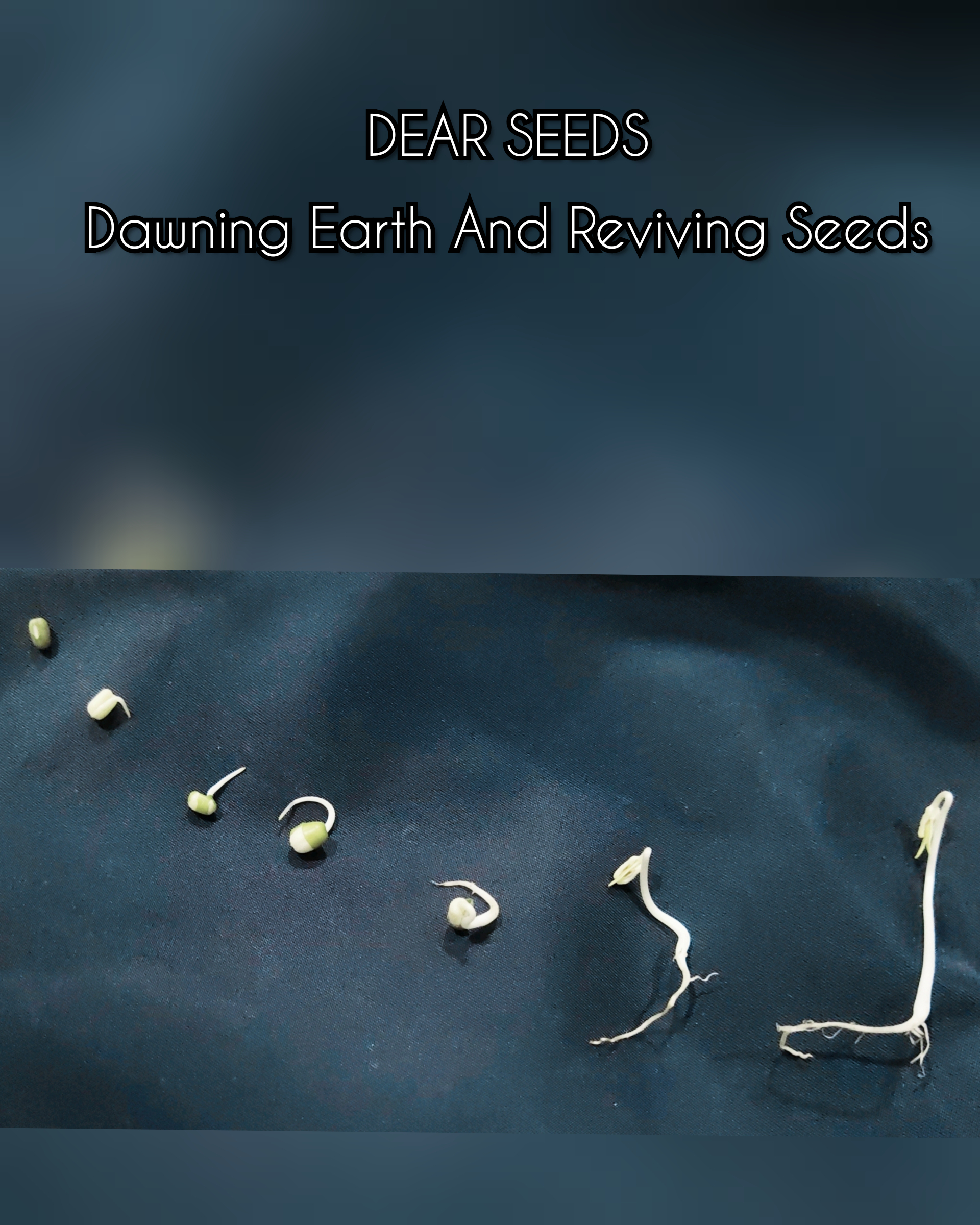
Why the people plant Plants in Van Mahotsav- how digging out plant from one soil to other soil is going to increase the green population!!! And they came up with an innovative yet simple Programme- Dawning Earth And Revive- DEAR SEEDS. Students demonstrated the zero effort creation of plant let's from numerous seedlings which can be planted instead purchasing a plant and planting sapling once a year on such occasion. They even explained the significance of seeds and they should not be thrown in dustbin which eventually get destroyed in landfills. Instead these seeds can be dried and thrown on roadsides and any favorable land areas while traveling. Summer being the season of fruits can be used widely to observe this programme DEAR SEEDS.
mygov_165803756778754791
Ajinkya Rajendra Kolkar
Ajinkya Rajendra Kolkar 3 years 11 months ago
What can be done to promote greater attention to both? The best approach is to educate the consumers, and the industry, to leave behind an either/or approach to development and conservation and to take on a balanced ratio approach that seeks the best of both worlds. This is very hard to do as it requires an element of sacrifice be adopted by the present society. To this end you need both of the sides to come together to commit to creating regulations, incentive programs and tax credits that promote sustainable development while defining priorities for conservation in different areas that will also feed back into the local communities. More research and development is also needed in the areas of sustainable development to create better engineering and construction options that are more in keeping with environmental sustainable goals. In the end, no one can afford to lose sight of the fact that the environment as we know it is steadily eroding .
Ajinkya Rajendra Kolkar
Ajinkya Rajendra Kolkar 3 years 11 months ago
What are the current practices that seek a balance? Resolving these differences can be difficult. Very often, money and economy will prove to be the deciding factor. This doesn’t mean that one side loses and one side wins, but the environmental factors can influence the development design to create an approach that provides the best of both worlds, without completing adopting one approach over the other. The environmental sustainability plans may show the sustainable development engineers that there are aspects of their design that can be improved to lessen the impact of the project on the wetland area that would still be in existence. Through committing funds and development to protected areas that are not a part of the development, environmental sustainability projects that emphasize conservation and public education can advance further than they would have on their own.
Ajinkya Rajendra Kolkar
Ajinkya Rajendra Kolkar 3 years 11 months ago
What is Sustainable Development? Sustainable development is the practice of developing land and construction projects in a manner that reduces their impact on the environment by allowing them to create energy efficient models of self-sufficiency. This can take the form of installing solar panels or wind generators on factory sites, using geothermal heating techniques or even participating in cap and trade agreements. The biggest criticism of sustainable development is that it does not do enough to conserve the environment in the present and is based on the belief that the harm done in one area of the world can be counter balanced by creating environmental protections in the other.