Home | MyGov

Accessibility
Accessibility Tools
Color Adjustment
Text Size
Navigation Adjustment
Screen Reader iconScreen Reader

Inviting Suggestions on the Draft Blue Economy Policy

Inviting Suggestions on the Draft Blue Economy Policy
Start Date :
Feb 19, 2021
Last Date :
Feb 27, 2021
23:45 PM IST (GMT +5.30 Hrs)
Submission Closed

With a coastline of nearly 7.5 thousand kilometres, India has a unique maritime position. Nine of its 29 states are coastal, and the nation’s geography includes 1,382 islands. ...

With a coastline of nearly 7.5 thousand kilometres, India has a unique maritime position. Nine of its 29 states are coastal, and the nation’s geography includes 1,382 islands. There are nearly 199 ports, including 12 major ports that handle approximately 1,400 million tons of cargo each year. Moreover, India’s Exclusive Economic Zone of over 2 million square kilometres has a bounty of living and non-living resources with significant recoverable resources such as crude oil and natural gas. Also, the coastal economy sustains over 4 million fisherfolk and coastal communities. With these vast maritime interests, the blue economy occupies a vital potential position in India’s economic growth. It could well be the next multiplier of GDP and well-being, provided sustainability and socio-economic welfare are kept centre-stage. Therefore, India's draft blue economy policy is envisaged as a crucial framework towards unlocking country’s potential for economic growth and welfare.

The MoES prepared the draft blue economy policy framework in line with the Government of India’s Vision of New India by 2030. It highlighted the blue economy as one of the ten core dimensions for national growth. The draft policy framework emphasizes policies across several key sectors to achieve holistic growth of India’s economy. The document recognizes the following seven thematic areas.

1.National accounting framework for the blue economy and ocean governance.
2.Coastal marine spatial planning and tourism.
3.Marine fisheries, aquaculture, and fish processing.
4.Manufacturing, emerging industries, trade, technology, services, and skill development.
5.Logistics, infrastructure and shipping, including trans-shipments.
6.Coastal and deep-sea mining and offshore energy.
7.Security, strategic dimensions, and international engagement.

The Ministry of Earth Sciences (MoES) has rolled out the Draft Blue Economy policy for India by Inviting suggestions and inputs from various stakeholders including industry, NGOs, academia, and citizens. The draft blue economy policy document outlines the vision and strategy that can be adopted by the Government of India to utilize the plethora of oceanic resources available in the country.

Click here to read the Draft Blue Economy Policy.

Reset
Showing 487 Submission(s)
SANJAY SINGH_323
SANJAY SINGH_323 5 years 3 months ago
First we should identify ecologically sensitive areas and then plan accordingly. we need to ensure good road, rail and airport connectivity to promote tourism, adventure water sports and fishing. We should develope several Marine research centers to constantly monitor Marine ecology. We need to promote fish farming in a big way. To ensure safety and security of our coastline we should expand our Marine security set up and increase participation of youth in it.
Abhay Pralhad Vaidya
Abhay Pralhad Vaidya 5 years 3 months ago
Respected Prime Minister, Namaskar, We have lot of sea area, we have to develope each area, accesable parrellel road, new bridges to cut the road transport distance, we can utilise maximim sea way for public and material/goods transportation it will decrease the transport time as wel as petrol/diesel consumption will be come down with large quantity, hence the importing also come down, we can increase fisheriese and salt production, please take proper action, sent receipt for post,
MADHAVISASTRY
MADHAVISASTRY 5 years 3 months ago
A great topic which serves future generations. My humble request to govt. Is to make more frequently people visiting coastal places under vigilance and to make security check spots to curtail usage of plastic which harms our planet and also to protect species.
MD TAUHEED
MD TAUHEED 5 years 3 months ago
Coastal Range are main Business Field of international trade so we need to joint it to below develop area. witch is give a parallel developing jone in all India. Regards.
DRISHTI KATHURIYA
DRISHTI KATHURIYA 5 years 3 months ago
The “blue economy” concept seeks to promote economic growth, social inclusion, and the preservation or improvement of livelihoods while at the same time ensuring environmental sustainability of the oceans and coastal areasindian coastline is vast and full of natural and maritime resources. Thankyou, Drishti kathuria 7th
Pandey Pragnesh Anandkishore
Pandey Pragnesh Anandkishore 5 years 3 months ago
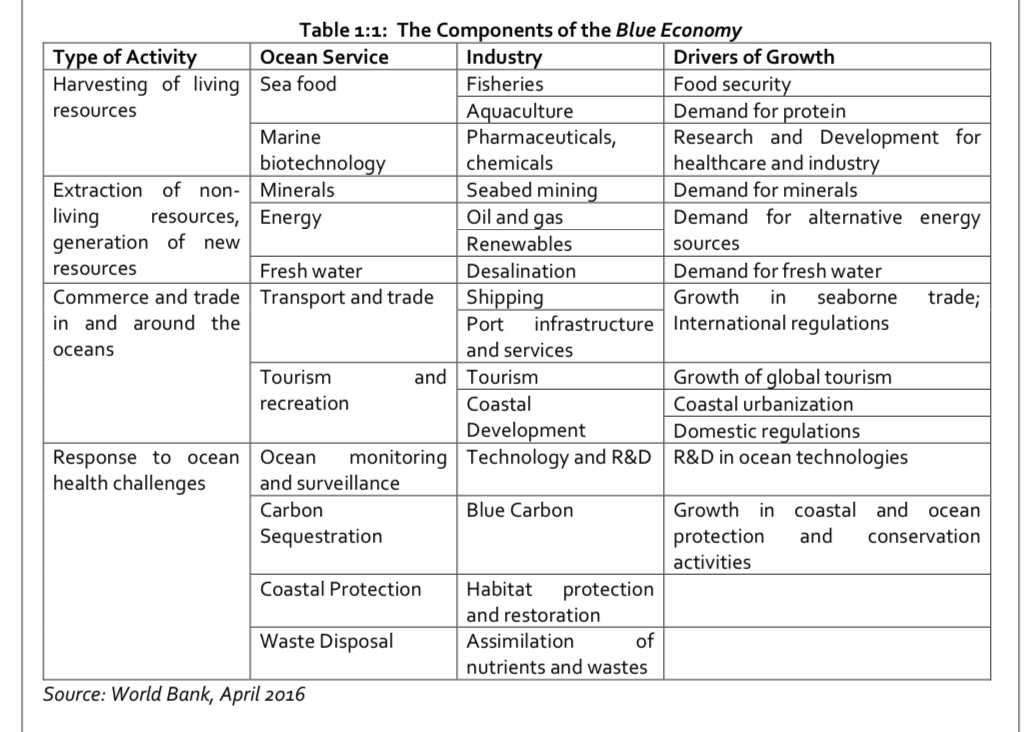
The “blue economy” concept seeks to promote economic growth, social inclusion, and the preservation or improvement of livelihoods while at the same time ensuring environmental sustainability of the oceans and coastal areas. It serves as the decoupling of socio-economic activities and development from environmental degradation and optimizing the benefits which may be derived from marine resources. Policy should also draw relevant points from the reference table of the world bank 2016 policy.
mygov_161423512167071851
Satish Kumar Pandey
Satish Kumar Pandey 5 years 3 months ago
indian coastline is vast and full of natural and maritime resources. people residing along costal region are poor they should be given right to access food resources with green and traditional technology. security must be installed with every view. thanks
thota lily
thota lily 5 years 3 months ago
Improve lives of coastal communities. Preserve marine biodiversity. Maintain the national security of marine areas and resources. Waste management should be implemented on land so that it can help ocean recover.